
An oversized piggy bank: the scale and agency problem of the pension system
The Icelandic pension system is one of the strongest in the world. Through foresight, Icelanders have managed to build a nearly fully funded system. The sheer scale of the system does, however, bring certain challenges with it. Mandatory saving is higher here than anywhere else, and the pension funds hold large stakes in many of the country's largest companies. Analysis by Viðskiptaráð shows that an agency problem exists, that risk is too heavily concentrated domestically, and that members have limited influence over the funds' decisions. Viðskiptaráð proposes lower mandatory contributions, member democracy, greater risk diversification, and more discipline and transparency around costs.

Summary
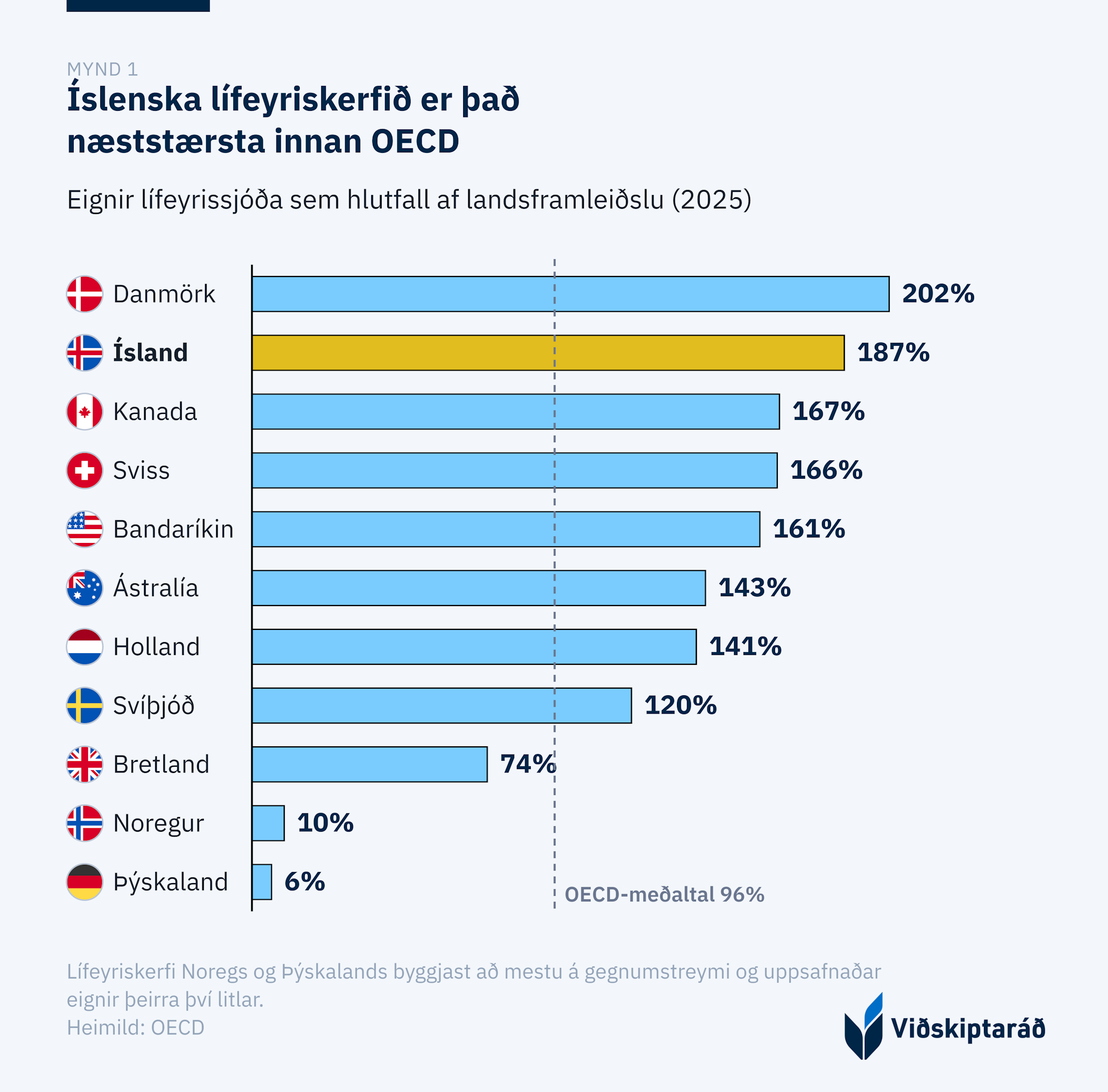
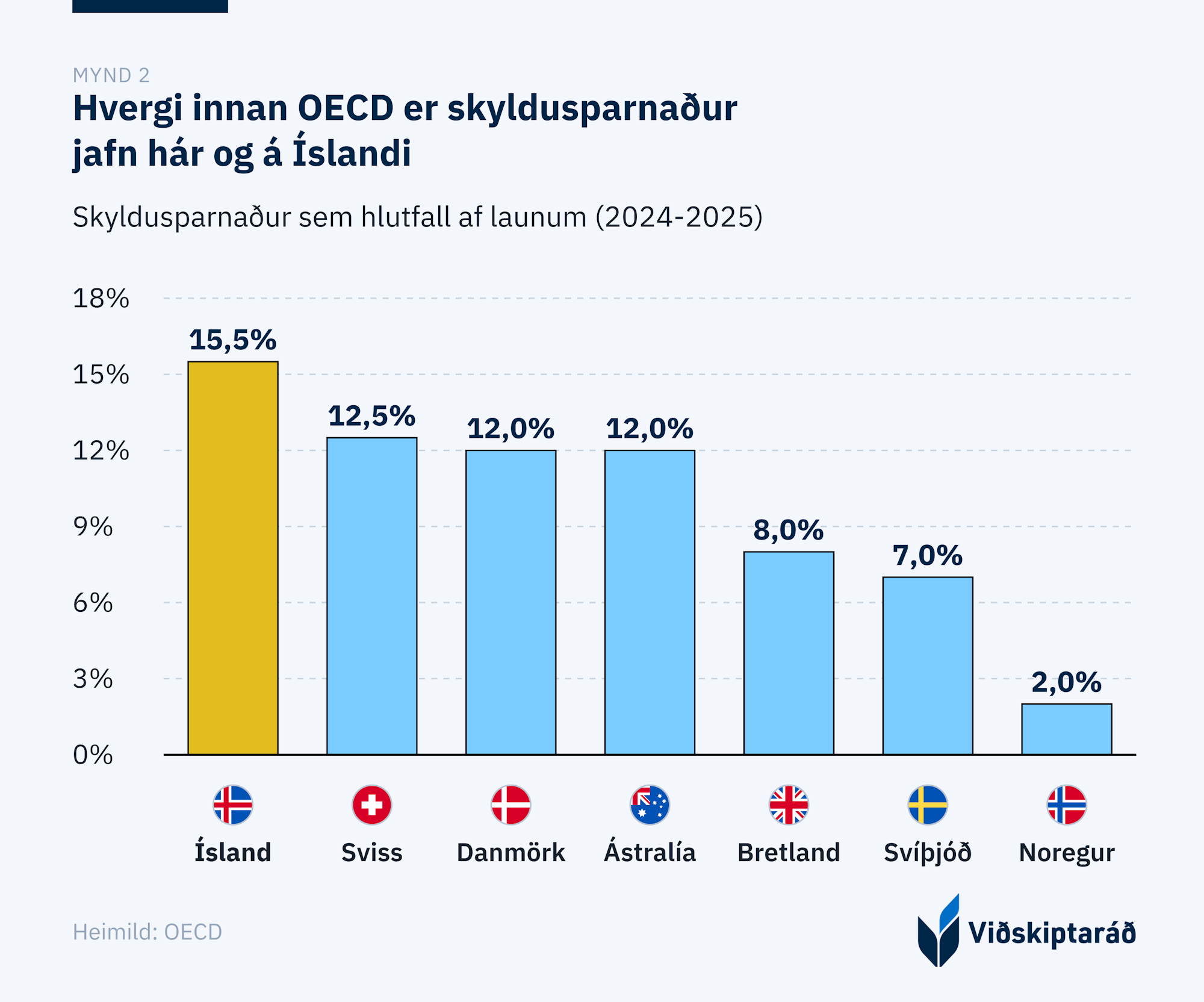
- The pension funds' assets amount to 187% of GDP, the second highest of any OECD country, and nowhere in the OECD is mandatory saving higher than in Iceland, at 15.5% of all wages and up to 21.5% including voluntary supplementary pension saving.
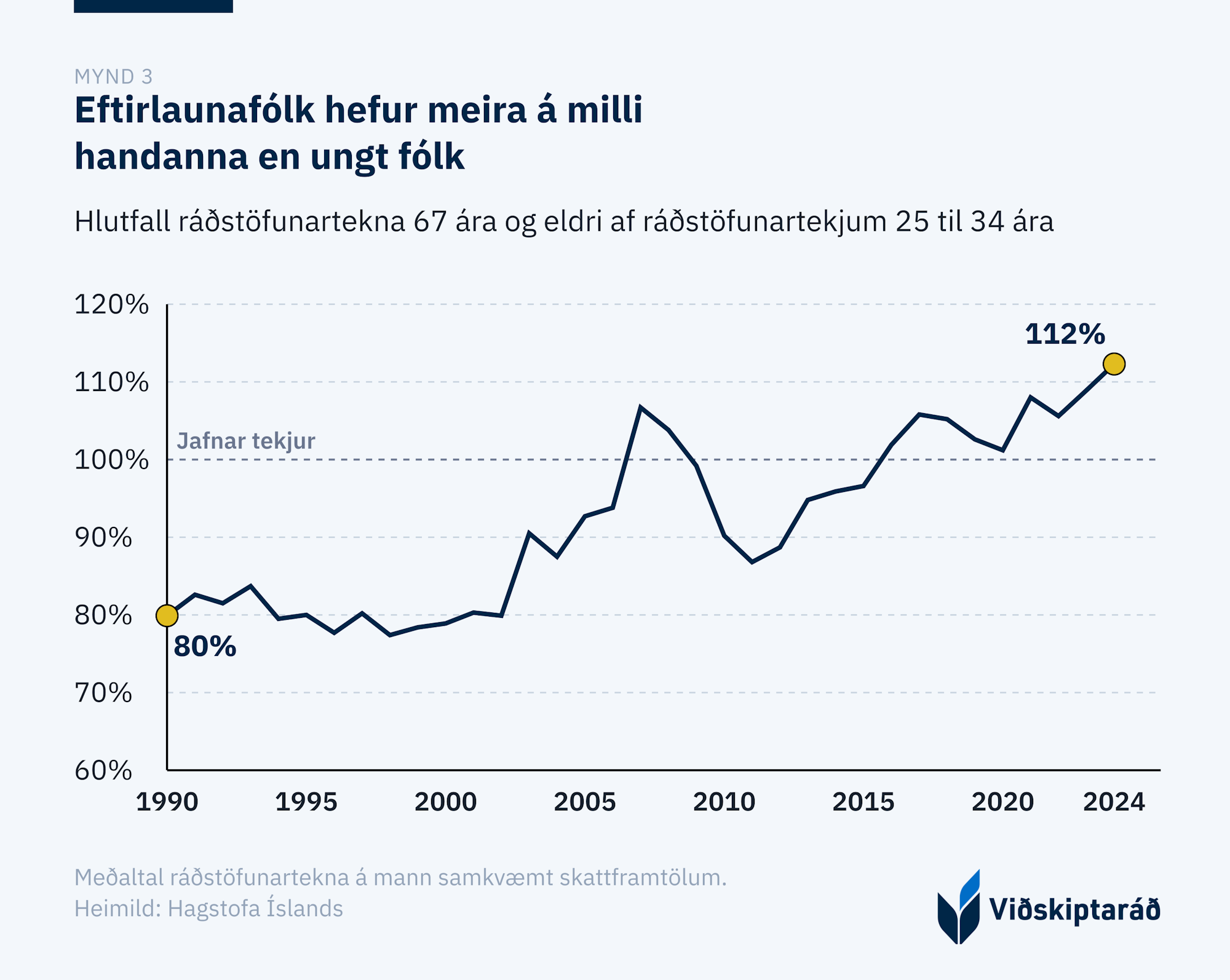
- The system moves money from the stage of life where the need is greatest to the stage where it is smallest. Disposable income for those aged 67 and over is now 12% higher than for people aged 25 to 34, whereas it was a fifth lower around the turn of the century.
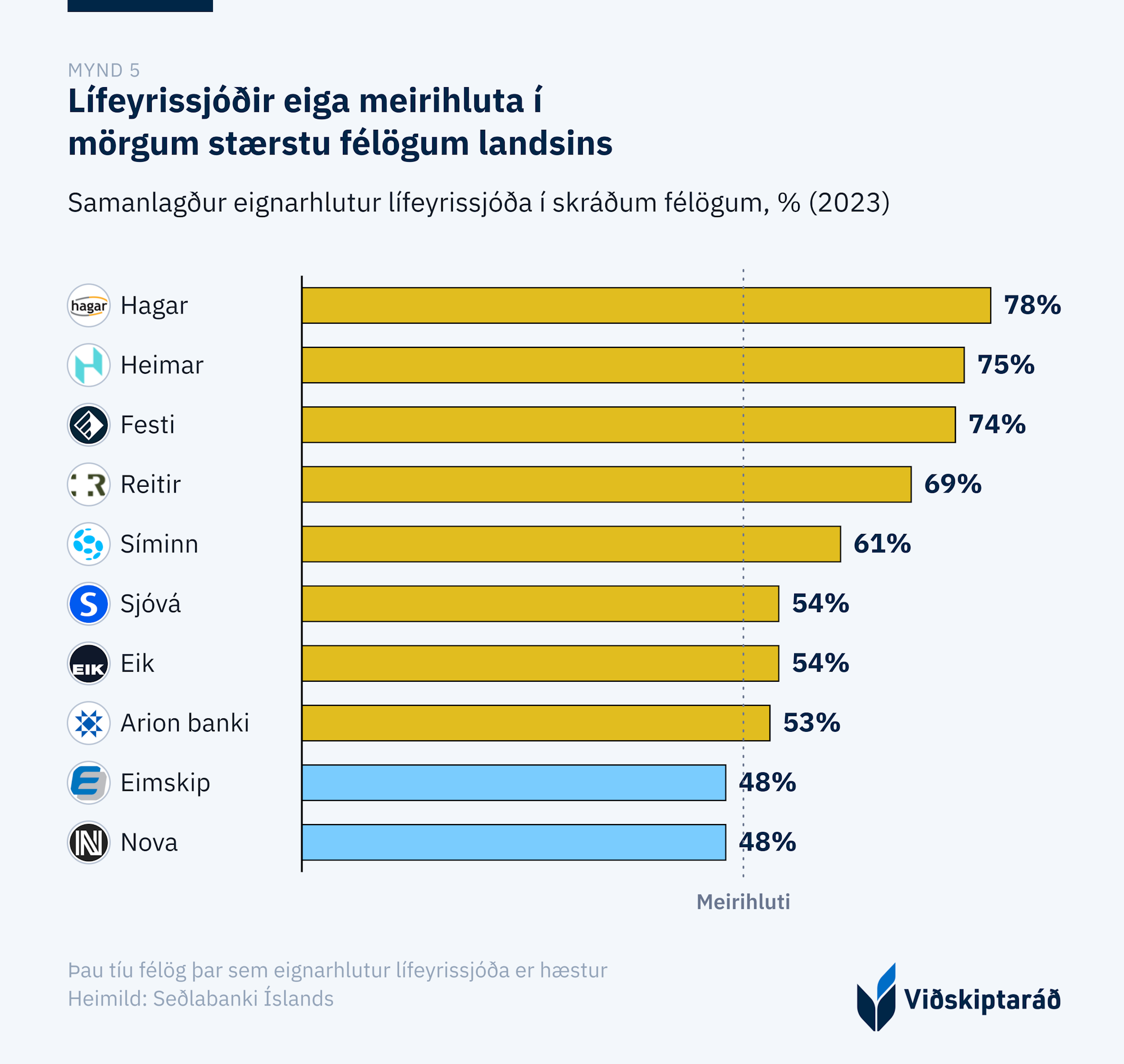
- The funds own 35% of the market value of listed equities and 58% of outstanding government securities. In Hagar, Heimar and Festi their combined ownership stake exceeds 70%.
- Members do not elect the funds' boards; instead these are appointed by employers' associations and trade unions, as was agreed back in 1969. The resulting agency problem can lead to poorer returns.
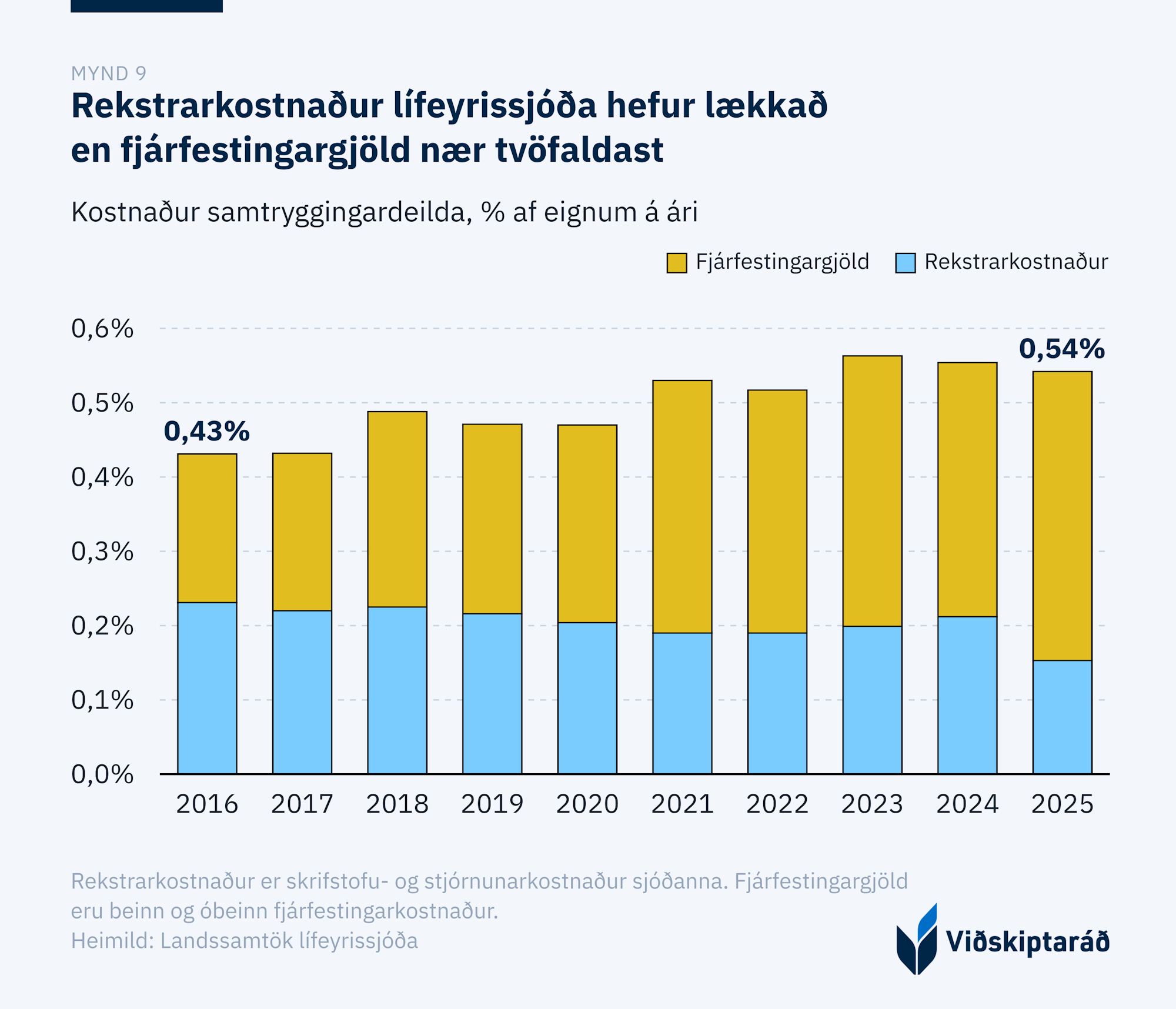
- Administering the system costs around ISK 45 billion a year, or 0.54% of assets. It is important that members are able to hold their own fund to account and that costs are transparent.
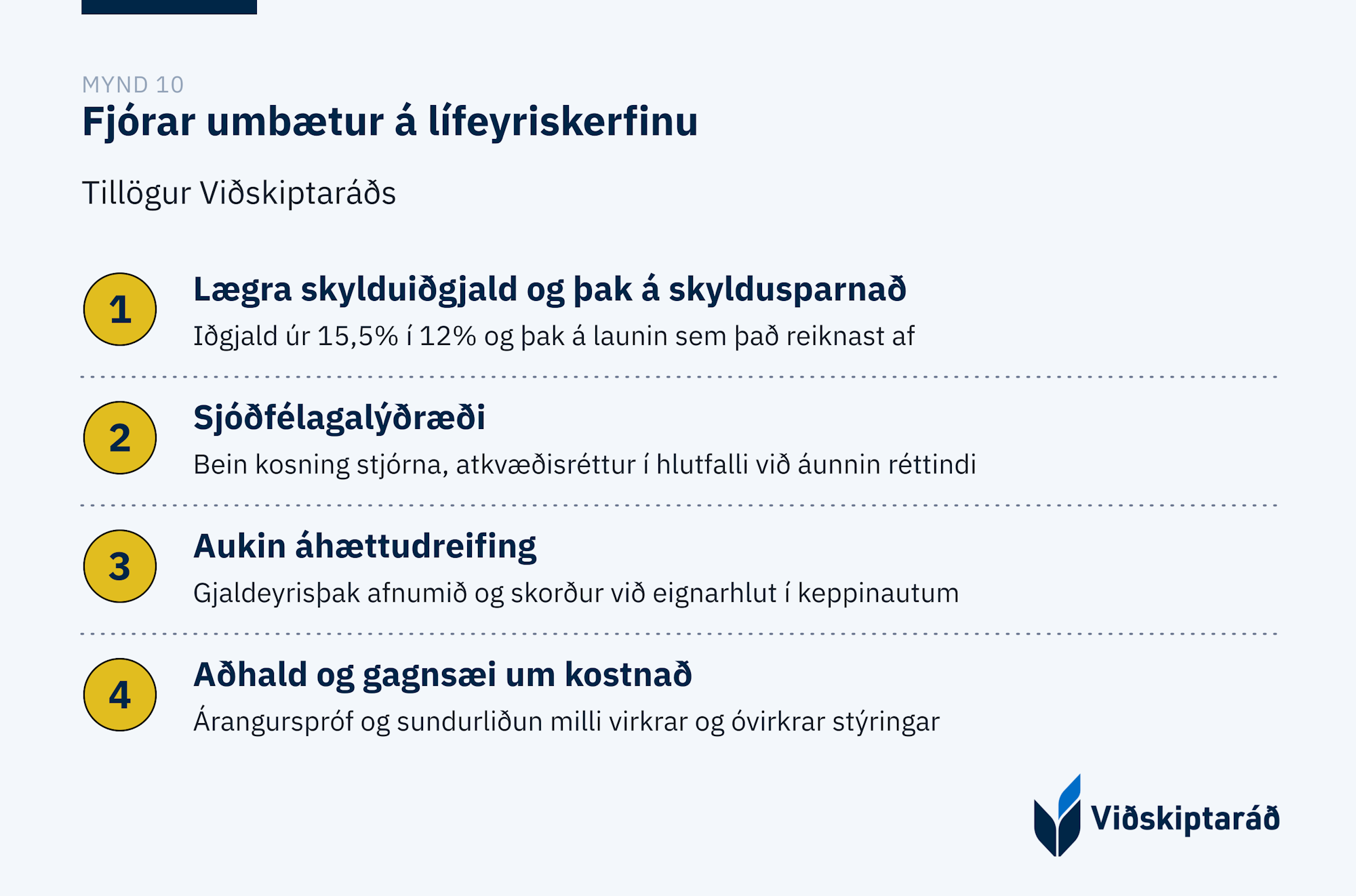
- Viðskiptaráð proposes that the mandatory contribution be lowered, that members elect the funds' boards, that risk diversification be increased, and that greater transparency around costs be ensured.
Over fifty years Icelanders have built a strong pension system based on pre-funding. The pension funds' assets amount to 187% of GDP, the second highest of any OECD country after Denmark, while the pay-as-you-go systems of most European countries are struggling with mounting burdens from an ageing population (figure 1).[1] Because of this pre-funding, the Icelandic state spends only 2.9% of GDP on pension payments, while the OECD average is 8.1% and Italy and Greece spend around 16% on pensions.[2] The system has repeatedly received the highest grade in Mercer's international comparison of the world's pension systems.[3]
Broadly speaking, pension systems fall into two categories. On the one hand there are funded systems, in which individuals' contributions are set aside, invested and left to accumulate over their working life, and are intended to cover their retirement pension later on. On the other hand there are pay-as-you-go systems, in which the contributions or taxes of those currently in the labour market are used to pay the pensions of those already drawing retirement benefits.
A fully funded pension system does, however, also bring certain challenges. The funds have become extremely large presences in Icelandic asset markets. Their assets would be enough to buy every single listed share, bond and bill on the Iceland Stock Exchange, and measured by assets they are now larger than the banking system and the insurance companies combined.[4] At the same time as workers are obliged to save through pension funds, they have no vote on who runs those funds and consequently little influence over how the money is deployed and what risks are taken.
The highest mandatory saving in the OECD
Mandatory saving in Iceland traces back to the 1969 wage agreements, when a contribution of 10% of workers' wages was agreed. The statutory minimum rose to 12% in 2007 and finally to 15.5% under legislation that took effect at the beginning of 2023.[5] The most recent jump can be traced to the equalisation of pension rights between the public and private labour markets. Legislation in 2016 fixed public employers' contribution at 11.5%, and wage agreements in the private market followed suit.[6] Instead of public employees' rights moving closer to those of the private market, the contribution across the whole labour market was raised to what had previously been a public-sector peculiarity. Nowhere in the process was any assessment made of what contribution rate would be needed to deliver a given level of pension payments. In the explanatory notes to the bill that enacted the 15.5% mandatory saving rate, the increase was justified by reference to wage agreements and the equalisation of rights between markets, but the Central Bank of Iceland pointed out in its comments that it was not clear “what assumptions or objectives underlie raising the minimum insurance protection from 12% to 15.5%”, and two pension funds proposed that the increase be dropped. The ministry referred the matter to a promised comprehensive review, which has not been completed.[7]
Statutory mandatory saving in Iceland is thus the highest within the OECD countries (figure 2). Moreover, mandatory saving is levied on full wages, whereas in many countries, for instance Switzerland and the Netherlands, there is a cap on the income on which contributions are calculated, which lowers the effective rate of mandatory saving.[2] In addition, employees in Iceland can put up to 4% into supplementary pension saving against an employer's matching contribution of at most 2%. Pension saving can therefore amount to 21.5% of total wages, which is high by international standards.[4] The tax framework encourages participation, since the employee's contribution is deductible from the income tax base and the employer's matching contribution does not count as taxable income until it is paid out.[8] Around 144,000 people paid into supplementary pension saving in 2024, or close to six in every ten of those paying into the mutual insurance component.[9]
The money arrives when the need is smallest
High mandatory saving affects households' financial decisions and can lead to an outcome at odds with people's most efficient pattern of consumption and saving over their lifetime. Throughout their working life an employee pays the same proportion into pension saving, yet the same krona is worth different amounts depending on where the individual is in their life cycle. In general, individuals seek to smooth their consumption over their lifetime,[10] but excessive mandatory saving moves money from the point at which the krona is worth most to people to the part of the life cycle where it delivers least.
Official data on wage developments give a clearer picture of how lifetime income evolves. Individuals aged 67 and over on average have more to spend than people under the age of 35 (figure 3).[11] Kronur are thus being moved from the most expenditure-heavy stretch of life to the point at which individuals owe less and their outgoings are smaller.
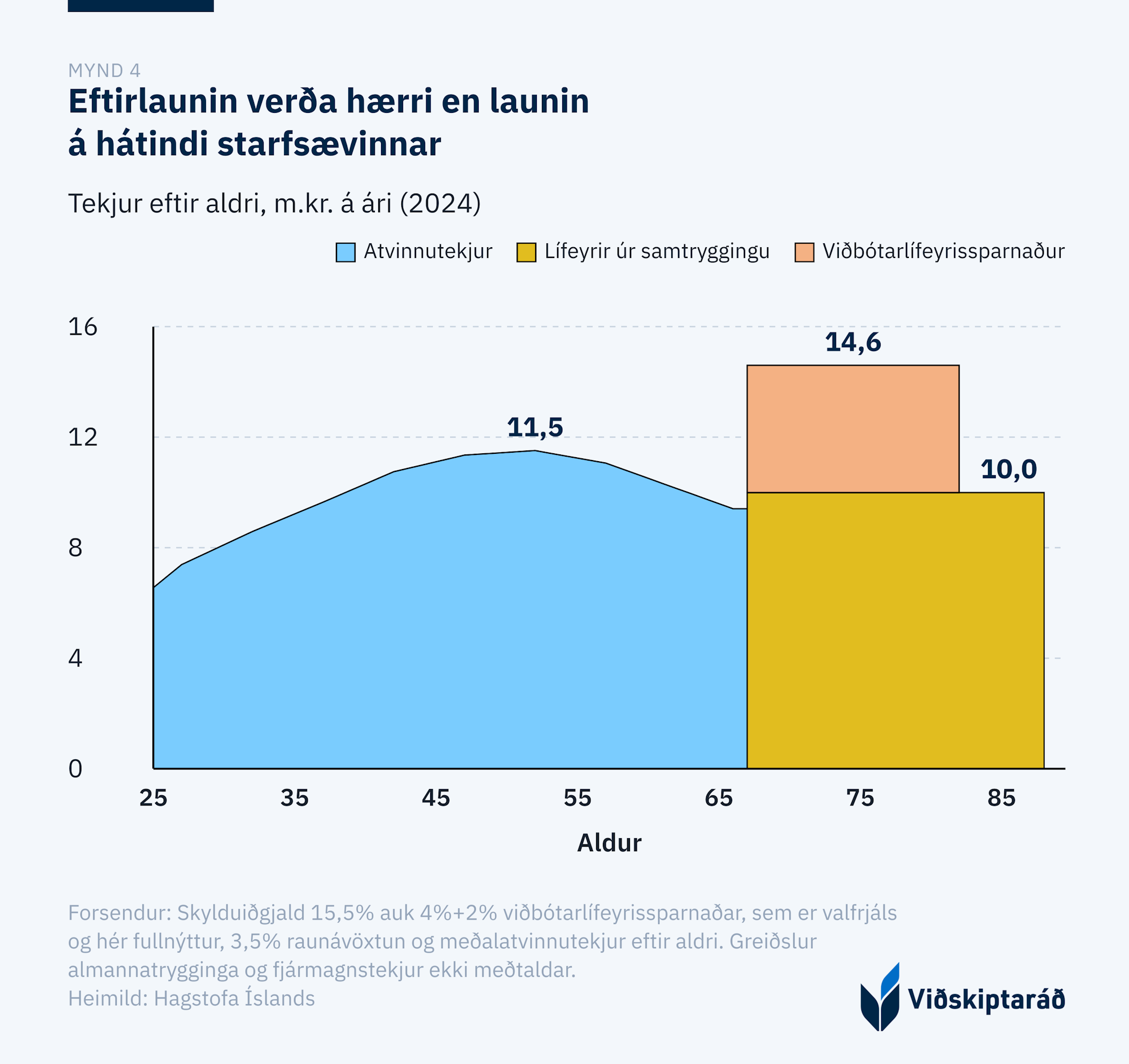
Under the current system, an employee on average earnings pays a mandatory contribution of 15.5% and can make use of the option of up to 4% in supplementary pension saving with a 2% matching contribution. Assuming a real return of 3.5% over the period, retirement income can amount to ISK 14.6 million a year over the first fifteen years of retirement. That is around a quarter more than wages at the peak of their working life and more than half again as much as wages at the point of retirement (figure 4).[12] It is also worth bearing in mind that individuals' net wealth generally rises as they move through the life cycle, so capital income exaggerates this picture further still.
Big fish in a small pond
The scale of the funds in domestic asset markets has no parallel in our neighbouring countries. According to a review by the Central Bank, the pension funds own, directly and indirectly, 35% of the market value of all equities on the Iceland Stock Exchange's main market, of which the four largest funds own 22%. In individual companies the ownership stake ranges from 2% up to almost 80%, and the funds own a majority of the listed equity in real estate, telecoms, insurance and retail companies (figure 5).[4] In the bond market the scale is greater still: the funds owned 58% of the nominal value of all outstanding government securities at the end of November 2025.[13]
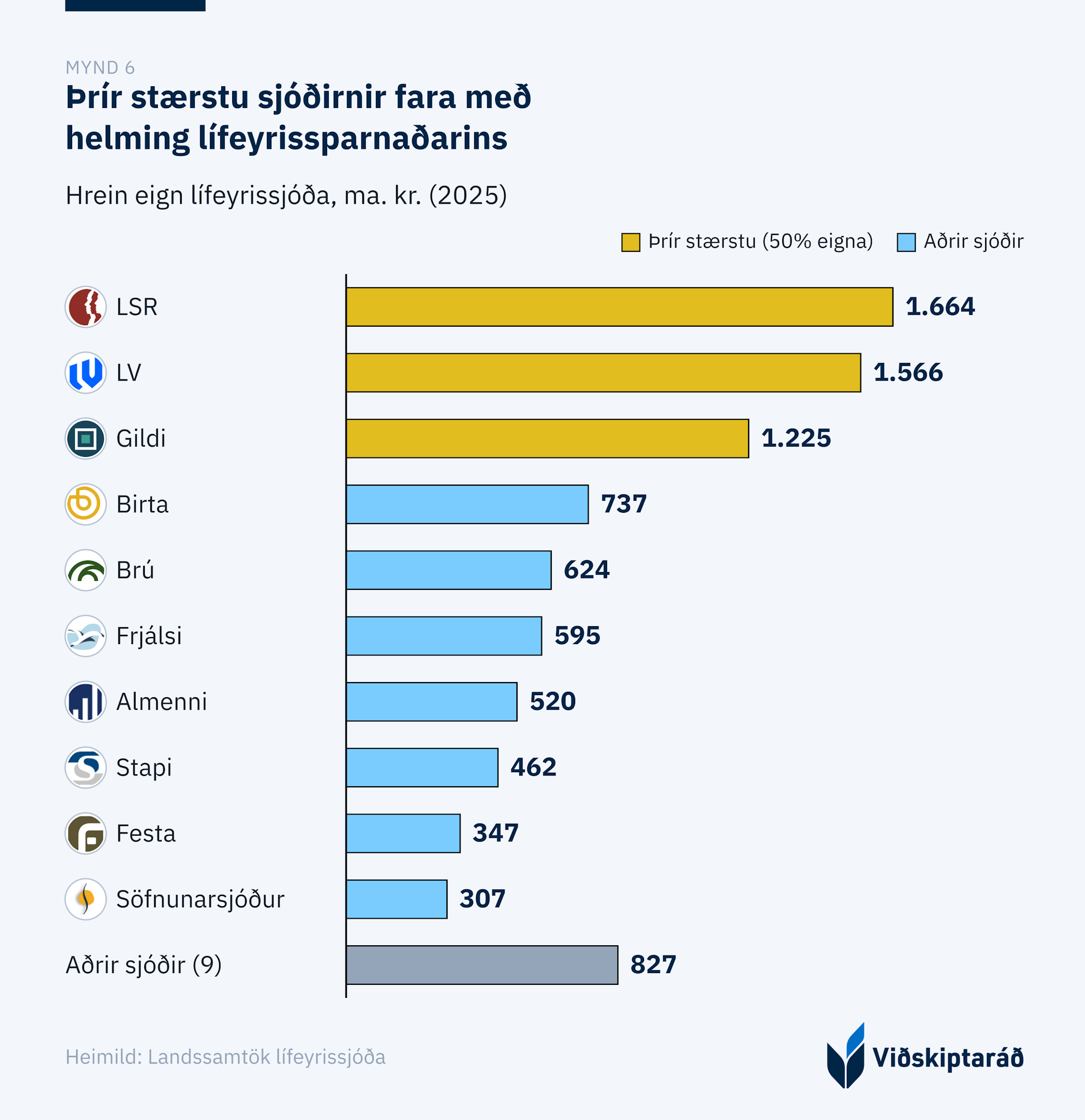
The three largest funds account for half of all the assets in the pension fund system, and the ten largest for 91% (figure 6).[14] The Central Bank has said that the size of the funds “may be a problem”, that their behaviour “may have a significant effect on price formation”, and that common ownership in competing companies can “impede effective competition” and lead to “serious conflicts of interest”.[4] The funds nonetheless simultaneously hold large stakes in the largest retail chains, in every listed real estate company and in every listed telecoms company.
Boards that nobody elected
Since 1969, the boards of pension funds in the private market have been appointed half by employers' associations and half by the trade unions behind the fund, either by direct nomination or by election of their representatives at the annual meeting, without any involvement of ordinary members.[15] Only in Frjálsi lífeyrissjóðurinn and Almenni lífeyrissjóðurinn do members elect all board members by direct vote.[16] In other funds, where participation is fixed by wage agreements, the workers who pay contributions into the fund have no vote in board elections and therefore no direct influence over who sits on the board (figure 7). Bills on democracy in pension funds have often been laid before Alþingi without being passed.[15] The chain of accountability is also broken: membership of a trade union is not a condition for paying into the fund, and those who sit on the fund's board need not be representatives of the relevant member's trade union. Many members therefore lack any realistic way of granting a mandate to those who exercise voting rights over their savings.
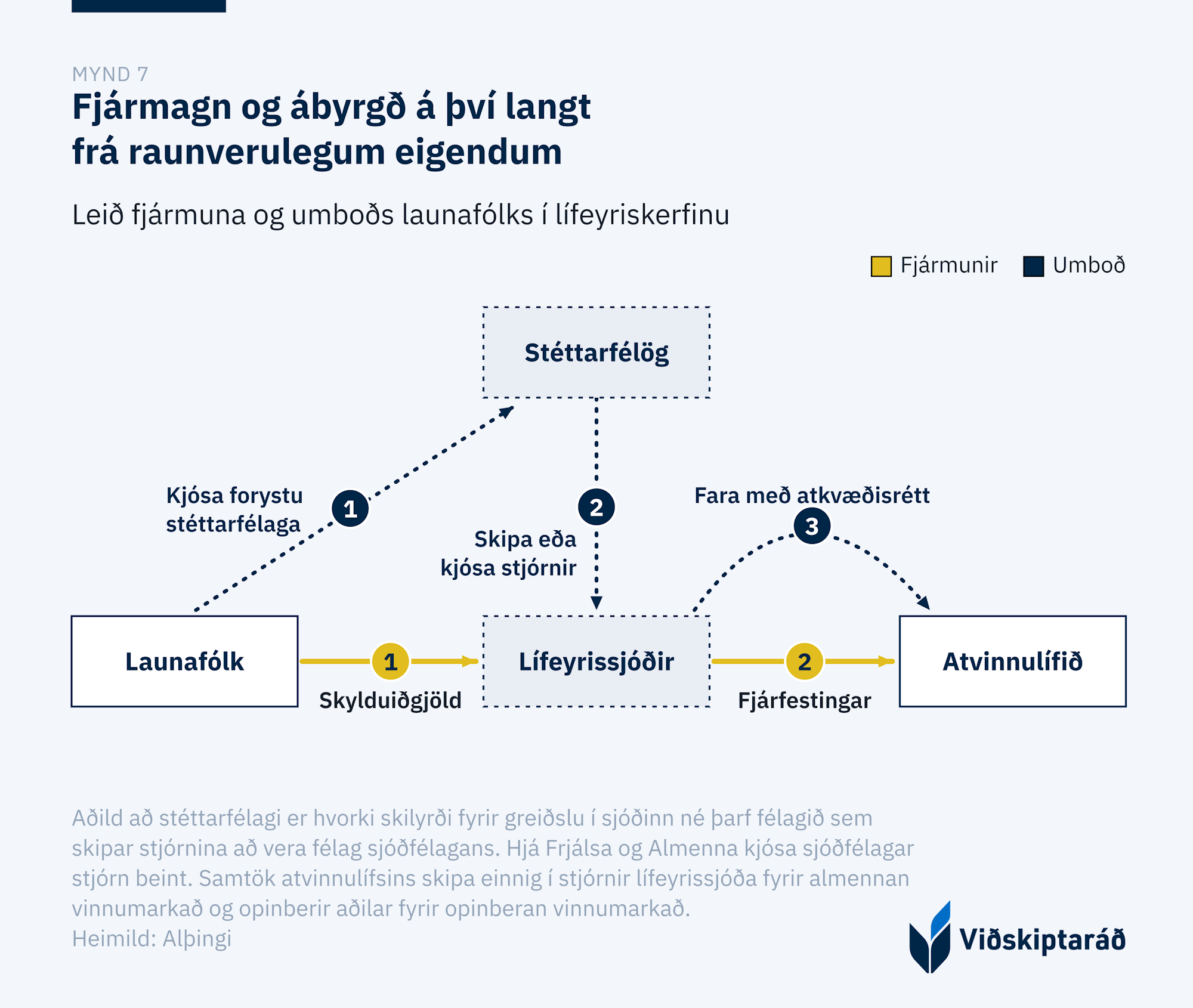
In economics this is known as the agency problem: it arises when the person handling other people's money does not share the owner's interests. The problem is not peculiar to Iceland and is amplified with every layer of intermediaries. Research on US pension funds shows that each ten percentage point increase in the share of board members appointed by government or stakeholders lowers the annual return on alternative investments by up to 0.9 percentage points.[17]
The agency problem becomes particularly clear when pension funds exercise members' ownership stakes in listed companies. There the funds take positions on board elections, remuneration policy, bonus schemes, mergers and other decisions of importance on behalf of their members. Matters of this kind can, by their nature, elicit differing views among owners. The agency problem does not lie in whether the funds vote for or against particular proposals, but in the fact that the members themselves have limited say over who exercises the voting rights attached to their savings and what considerations underpin that vote. The funds may thus take decisions at odds with the interests of the very members they are meant to serve.
Many eggs in the same basket
For a long time the legislature has held back pension funds' foreign investment through quantitative limits on individual asset classes. This spring the funds' investment authorisations were widened and the prudent person rule is now the governing principle in law. Despite this widening, the funds' scope for foreign investment remains constrained by a statutory cap on assets in foreign currencies. The statutory cap on foreign currency assets stands at 54.5% in 2026 and is to rise in steps to 65% by 2036.[5]
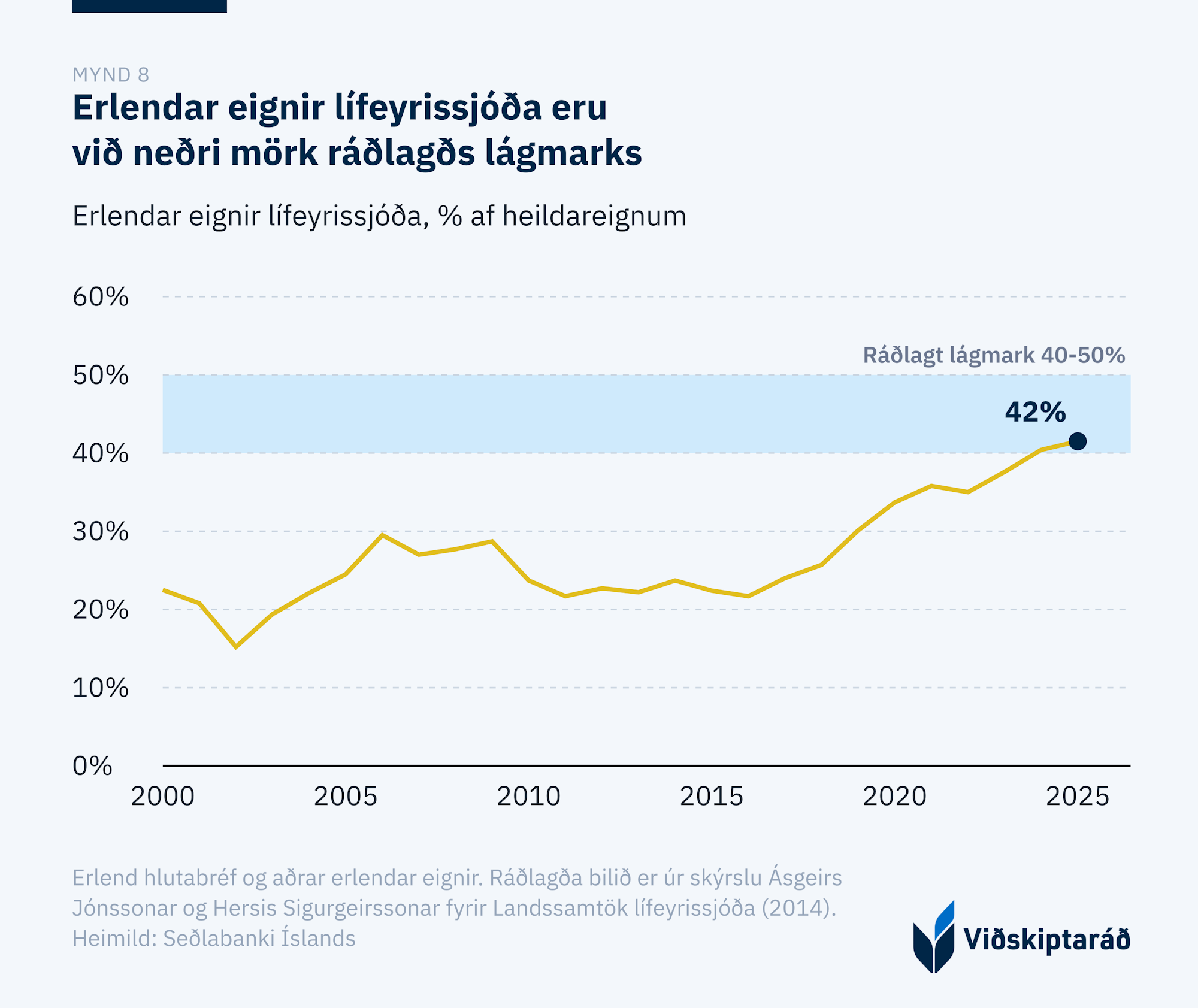
The pension funds' foreign assets have been growing in recent years and today stand at around 40%. That is rather lower than is generally the case in comparable countries: the Dutch pension system, for example, holds around 88% of its assets abroad, and the Norwegian oil fund invests nearly all of its assets abroad.[18],[19]
Greater risk diversification, for instance through increased foreign investment, better safeguards the return on Icelanders' pension savings, particularly against shocks specific to Iceland. A 2014 report on the pension funds' foreign assets concluded that foreign holdings should be in the range of 40 to 50%, but foreign investment has been far below that benchmark in recent years (figure 8).[20] In that context it is worth bearing in mind that Iceland was under capital controls in the years after the crash.
It is preferable for the pension funds themselves to determine their own risk diversification, rather than for the state to decide what counts as acceptable diversification across currencies.
A large and expensive overhead
Running eighteen pension funds, with all the attendant offices, boards, managing directors and investment teams, plus the investment fees that come with the business, is costly. The total cost of the system, the funds' own operating costs together with investment fees, amounted to around ISK 47 billion in 2025, or 0.54%[21] of assets.[14] The cost of administration has been rising in recent years, driven mainly by increasing investment fees (figure 9). This is happening at a time when the international trend has been for investment costs to fall.[22]
Active management is the most expensive form of fund management, yet research has shown that active management does not deliver excess returns. Over a twenty-year period, 94% of actively managed equity funds in the United States have delivered lower returns than the market index they compete against.[23] Economists have pointed out that the search for excess returns costs investors around 0.67% of market value a year, money that simply disappears into fees and administration.[24] Higher administration costs have a significant impact on members' pensions. An annual cost half a percentage point higher over a forty-year working life can reduce a member's pension by more than 10% by the end of it.
In 2021 Australia introduced a performance test in which each pension fund's returns and fees are compared against an objective benchmark, and funds that fail must notify their members of the result. Thirteen funds and savings options failed the first test, nine of them left the market, and four years later none failed. Members in funds and savings options falling below the benchmark numbered around a million at the outset but 8,500 in 2025.[25]
Reform in four steps
Iceland has done well in building a strong and well-funded pension system. In the course of that build-up the scale of the system has grown steadily, with the result that pension funds are today the largest investors in Iceland. It is important to ensure that the system serves its members as well as possible at every stage of life, that members have as direct an influence as possible over how their assets are deployed, that optimal risk diversification is possible, and that there is transparency around the cost of running the system.
In that context, Viðskiptaráð proposes the following reforms to the system:
1. A lower mandatory contribution and a cap on mandatory saving. Mandatory saving in Iceland is the highest within the OECD and is also calculated on all wages, regardless of amount. Viðskiptaráð proposes that the statutory minimum contribution be lowered from 15.5% to 12%, and that a cap also be placed on the level of wages on which the mandatory contribution is calculated. This would continue to secure strong pension protection while leaving individuals to deploy income above that themselves.
2. Member democracy. Members should elect board members in direct elections, with voting rights in proportion to accrued entitlements, as is already the practice at Frjálsi and Almenni. A duty to hold direct board elections in pension funds should be enshrined in law, in line with what has previously been laid before Alþingi. A seat on a pension fund board should rest on a direct mandate from the members.
3. Greater risk diversification. The statutory cap on pension funds' foreign currency assets should be abolished, so that they are free to diversify risk beyond Iceland's shores at whatever pace their boards judge sensible. Limits should be placed on individual funds' combined ownership stakes in competitors in the same market, in line with the Central Bank's recommendation.
4. Discipline and transparency around costs. Given the pension system's social insurance role, transparency around the cost of running the funds should be increased. A system modelled on the Australian approach should be introduced to ensure greater discipline over the cost of running pension funds. Funds should be required to undergo a performance test and to present the results to their members, including a breakdown between active and passive management.
The pension system is one of the largest assets Icelandic workers hold. A comprehensive review of the system has been announced but has not been carried out.[26] Meanwhile some ISK 160 billion a year is added to the system over and above what is paid out in pensions, and the challenges grow with it.[14] A balance must be struck between people being able to enjoy a carefree old age and not eroding their standard of living in their younger years. That objective will best be achieved through moderate mandatory saving, a democratic mandate, greater risk diversification and transparency in administration costs.
References
[1] OECD, „Pension Markets in Focus: Preliminary 2025 Data“ (2026), Link: https://www.oecd.org/content/dam/oecd/en/publications/support-materials/2025/11/pension-markets-in-focus-2025_361974da/PMF-Preliminary-2025-Data.pdf.
[2] OECD, „Pensions at a Glance 2025“, (2025), Link: https://www.oecd.org/en/publications/pensions-at-a-glance-2025_e40274c1-en.html.
[3] Landssamtök lífeyrissjóða, Mercer CFA Institute Global Pension Index, coverage (2025), Link: https://www.lifeyrismal.is/is/landssamtok-lifeyrissjoda/skyrslur-og-greinar/islenska-lifeyrissjodakerfid-er-fremst-i-flokki-fimmta-arid-i-rod.
[4] Central Bank of Iceland, „Umsvif lífeyrissjóða á fjármálamarkaði og æskilegar umbætur á löggjöf um lífeyrissjóði“, (2024), Link: https://sedlabanki.is/library/frettir-og-utgefid-efni/rit-og-skyrslur/serrit/Serrit_18_lifeyrissjodsumraeda__.pdf.
[5] Act No. 129/1997 on mandatory pension insurance and the activities of pension funds.
[6] Act No. 127/2016 amending the Act on the Pension Fund for State Employees.
[7] Bill amending Act No. 129/1997 (minimum contribution), case 690 of the 152nd legislative session.
[8] Act No. 90/2003 on income tax.
[9] Central Bank of Iceland, summary of pension funds' annual accounts 2024, part IV, Link: https://sedlabanki.is/gagnatorg/lifeyrissjodir/arsreikningar-lifeyrissjoda/
[10] Modigliani, F. and Brumberg, R., „Utility Analysis and the Consumption Function“ (1954), Link: https://direct.mit.edu/books/edited-volume/2669/chapter-abstract/72277/Utility-Analysis-and-the-Consumption-Function-An
[11] Statistics Iceland, „Income by sex and age“, Link: https://px.hagstofa.is/pxis/pxweb/is/Samfelag/Samfelag__launogtekjur__3_tekjur__1_tekjur_skattframtol/TEK01001.px
[12] Based on employment income by age from Statistics Iceland (2024). A real return of 3.5% is assumed, an annuity factor of 13.71 for the mutual insurance component, and a fifteen-year payout of supplementary saving, which is voluntary and here fully utilised.
[13] Ministry of Finance and Economic Affairs, „Stefna í lánamálum ríkisins 2026–2030“, (2025), Link: https://www.stjornarradid.is/library/02-Rit--skyrslur-og-skrar/Stefna%20%C3%AD%20l%C3%A1namálum%202026-2030%20vefur.pdf.
[14] Landssamtök lífeyrissjóða, „Hagtölur lífeyrissjóða“, (2026), Link: https://www.lifeyrismal.is/static/files/Hagtolur/hagtolur-a-vefinn-2026_6a.xlsx
[15] Bill amending Act No. 129/1997 (election of board members), explanatory notes, parliamentary document 315, 150th legislative session: https://www.althingi.is/altext/150/s/0315.html; parliamentary resolution proposal on member democracy, parliamentary document 158, 154th legislative session: https://www.althingi.is/altext/154/s/0158.html.
[16] Frjálsi lífeyrissjóðurinn, About Frjálsi: https://www.frjalsi.is/fleira/um-frjalsa/; Almenni lífeyrissjóðurinn, board election 2025: https://www.almenni-lifsverk.is/stjornarkjor-2025.
[17] Andonov, A., Hochberg, Y. and Rauh, J., „Political Representation and Governance: Evidence from the Investment Decisions of Public Pension Funds", Journal of Finance 73(5) (2018): https://onlinelibrary.wiley.com/doi/abs/10.1111/jofi.12706
[18] OECD, Pension Markets in Focus 2025 (2025), table A.12 (share of assets held abroad at end-2024): https://www.oecd.org/en/publications/pension-markets-in-focus-2025_b095d0a0-en.html
[19] Website of the Norwegian oil fund, Link: https://www.nbim.no/en/
[20] Landssamtök lífeyrissjóða, „Áhættudreifing eða einangrun?“, (2014), Link: https://www.lifeyrismal.is/static/files/old/LL-skyrsla_FINAL_24112014.pdf
[21] Cost ratio of the pension funds' mutual insurance division
[22] Evans, Z. „Fund fees are still declining, but not as quickly as they once were“. Link: https://www.morningstar.com/financial-advisors/fund-fees-are-still-declining-not-quickly-they-once-were
[23] S&P Dow Jones Indeces, „SPIVA U.S. Scorecard Mid-Year 2025“, Link: https://www.spglobal.com/spdji/en/documents/spiva/spiva-us-mid-year-2025.pdf
[24] French, K., „Presidential Address: The Cost of Active Investing“, Journal of Finance 63(4) (2008): https://onlinelibrary.wiley.com/doi/abs/10.1111/j.1540-6261.2008.01368.x.
[25] APRA, „APRA releases 2025 superannuation performance test results and product insights“, (2025), Link: https://www.apra.gov.au/news-and-publications/apra-releases-2025-superannuation-performance-test-results-and-product
[26] Ministry of Finance and Economic Affairs, „Starfshópur um heildarendurskoðun lífeyrissjóðakerfisins skipaður“ (2023), Link: https://www.stjornarradid.is/efst-a-baugi/frettir/stok-frett/2023/03/24/Starfshopur-um-heildarendurskodun-lifeyrissjodakerfisins/.
This article was automatically translated from the Icelandic original.
Related Content
A Supersized Pension System
State investments need clearer cost-benefit analysis
Warning over added burdens on companies from the energy efficiency directive

Pay Day is today

Tariff protection explains high grocery prices