
Pay Day is today
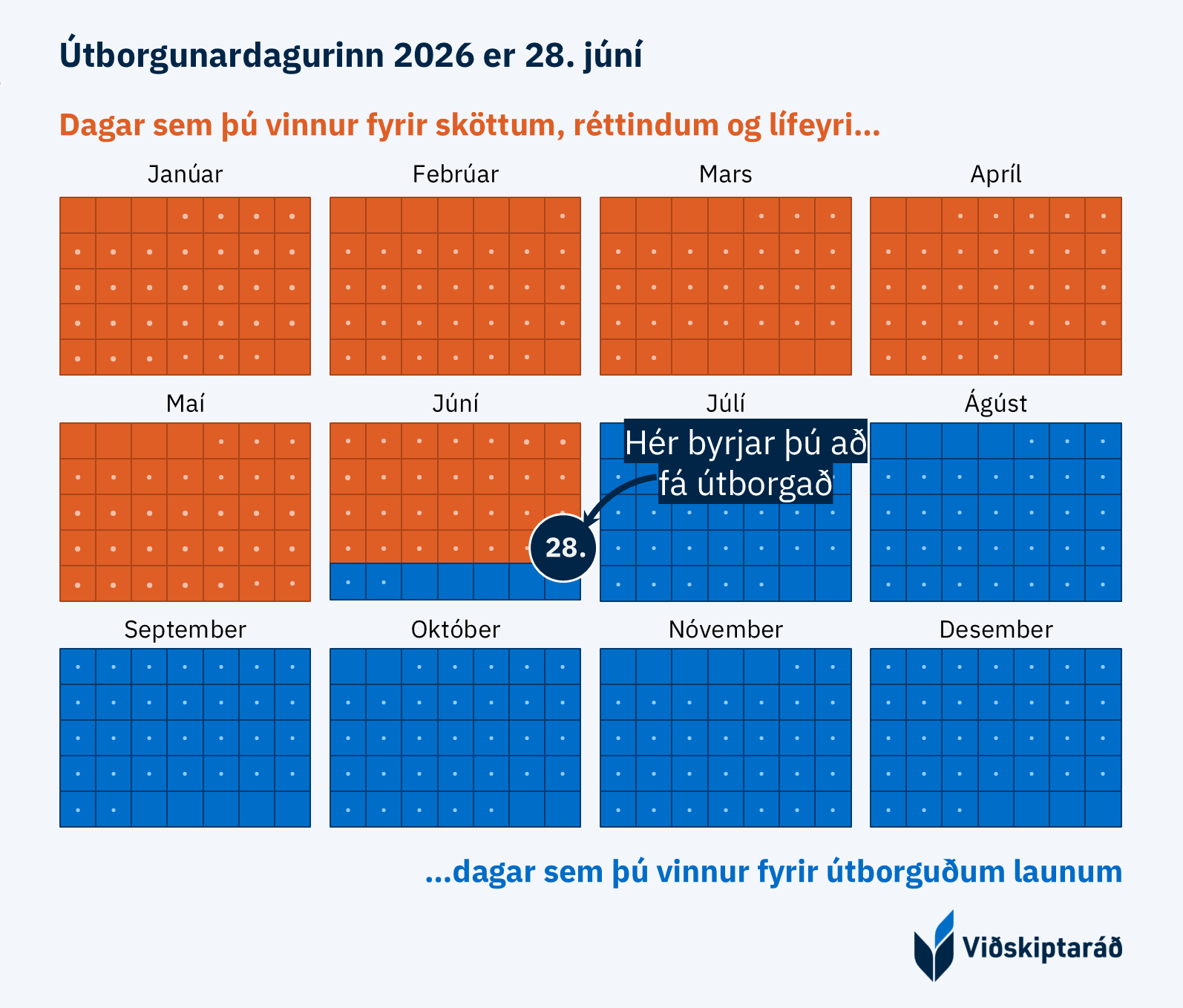
Pay Day 2026 is today, 28 June. From today, an employee starts working for their take-home pay, whereas from the beginning of the year until now they have been working for taxes, pension rights, and pension savings.

Today, an employee on average earnings starts working for pay that ends up in their pocket, whereas up until today they have been working for taxes, pension entitlements, and other collectively agreed levies. This is the conclusion of the Iceland Chamber of Commerce's review of the so-called wage wedge — the difference between an employer's labour costs and the employee's take-home pay. This is the third time the Chamber has carried out the review, and the date has shifted back by one day compared with the results of the previous two years.
Half goes to something other than take-home pay
An employer's cost of paying an employee 826,000 krónur in monthly wages — the median salary for full-time workers in 2025 — amounts to 1.2 million krónur. After local tax, municipal tax, and income tax, plus pension contributions, the employee then receives 596,600 krónur in take-home pay. Of companies' total labour costs, therefore, just under half goes to taxes, pension payments, and other entitlements.
Converted into calendar days, the result is that for the first 178 days of the year an employee has been working for something other than take-home pay. It can therefore be said that from today onwards the employee starts working for their take-home pay, whereas up until now they have been working for taxes, entitlements, and pension payments.
The payslip could be published in full
The majority of the wage wedge falls on the company — around 60%. The weightiest items are the employer's pension contribution, social security contribution, and holiday pay. Around 40% falls on the employee in the form of income tax, municipal tax, and pension savings. All these cost items reduce monthly take-home pay, regardless of whether they are paid by the company or the employee.
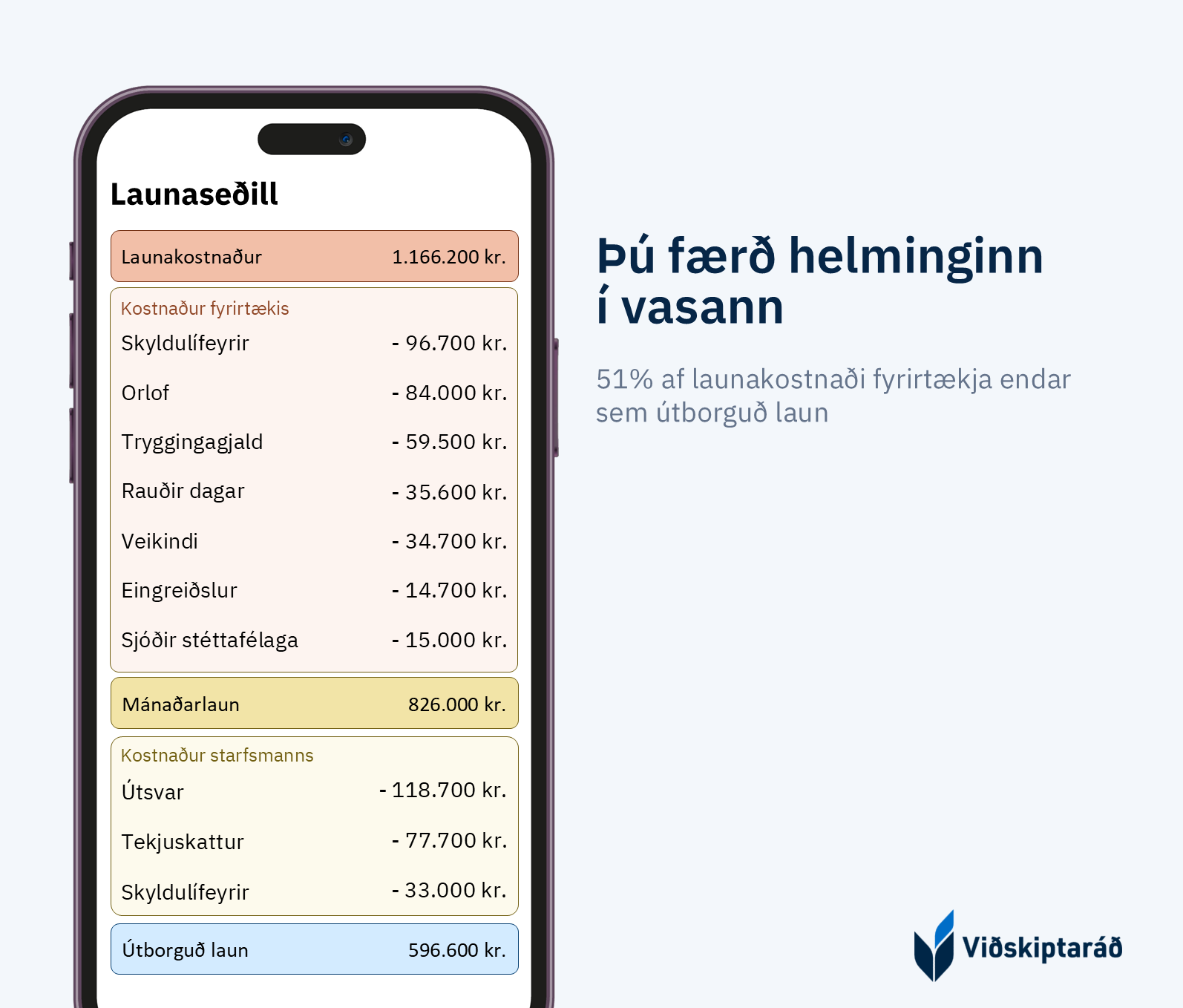
The Iceland Chamber of Commerce encourages companies to update their payslips so that the full wage wedge is visible on them. In this way, employees can see all the items that cause their take-home pay to be lower, which increases transparency and trust. Companies could also break out the municipal tax separately so that employees can see the split of tax payments between central and local government.
The presentation of payslips is unrestricted in Iceland, as long as the information disclosure provisions of collective agreements are met, so employers can make this change today.
Many opportunities to bring Pay Day forward
The wage wedge consists of taxes, pension payments, and various entitlements. There are opportunities to reduce the following categories:
- Income tax reduction: A 2 percentage point reduction in income tax would increase take-home pay by 15,900 kr. per month.
- Reduction in social security contribution: A 1 percentage point reduction in the social security contribution would increase take-home pay by 5,600 kr. per month.
- Reduction in compulsory pension contributions: In recent years, pension fund contributions have increased and now stand at a minimum of 15.5% of wages. A 2 percentage point reduction in compulsory pension savings would increase take-home pay by 15,100 kr. per month.
If all the changes were implemented simultaneously, their combined effects would increase take-home pay by 35,000 per month or 420,000 krónur per year, and would ensure that individuals start working for their take-home pay earlier.
This article was automatically translated from the Icelandic original.
Related Content

A Supersized Pension System

An oversized piggy bank: the scale and agency problem of the pension system

Video: Did you know the state takes up to 80% of the retail price of alcohol?

Warning over added burdens on companies from the energy efficiency directive

Tariff protection explains high grocery prices