The Icelandic Economy 2026
Moderate growth is expected despite persistent inflation and rising unemployment. Export diversification continues to increase, and tourism remains resilient though faced with multiple challenges. This is according to The Icelandic Economy, a newly published report by the Chamber of Commerce on economic developments in Iceland.
The Iceland Chamber of Commerce has published a new edition of The Icelandic Economy, a report offering a unique and comprehensive overview of the economy. The report covers the development of short-term indicators, the current state and outlook of the economy, external trade in goods and services, inflation and currency developments and outlook, and other economic insights.
Below is a short excerpt from each of the chapters. The full report is accessible to all members of the Chamber. To download it, log in using your work email. If the email domain belongs to one of the member firms, you will receive a link to log in:
Paywalled content
This content is only available to members of the Chamber.
Sign in or apply for membership to access it.
Moderate growth ahead
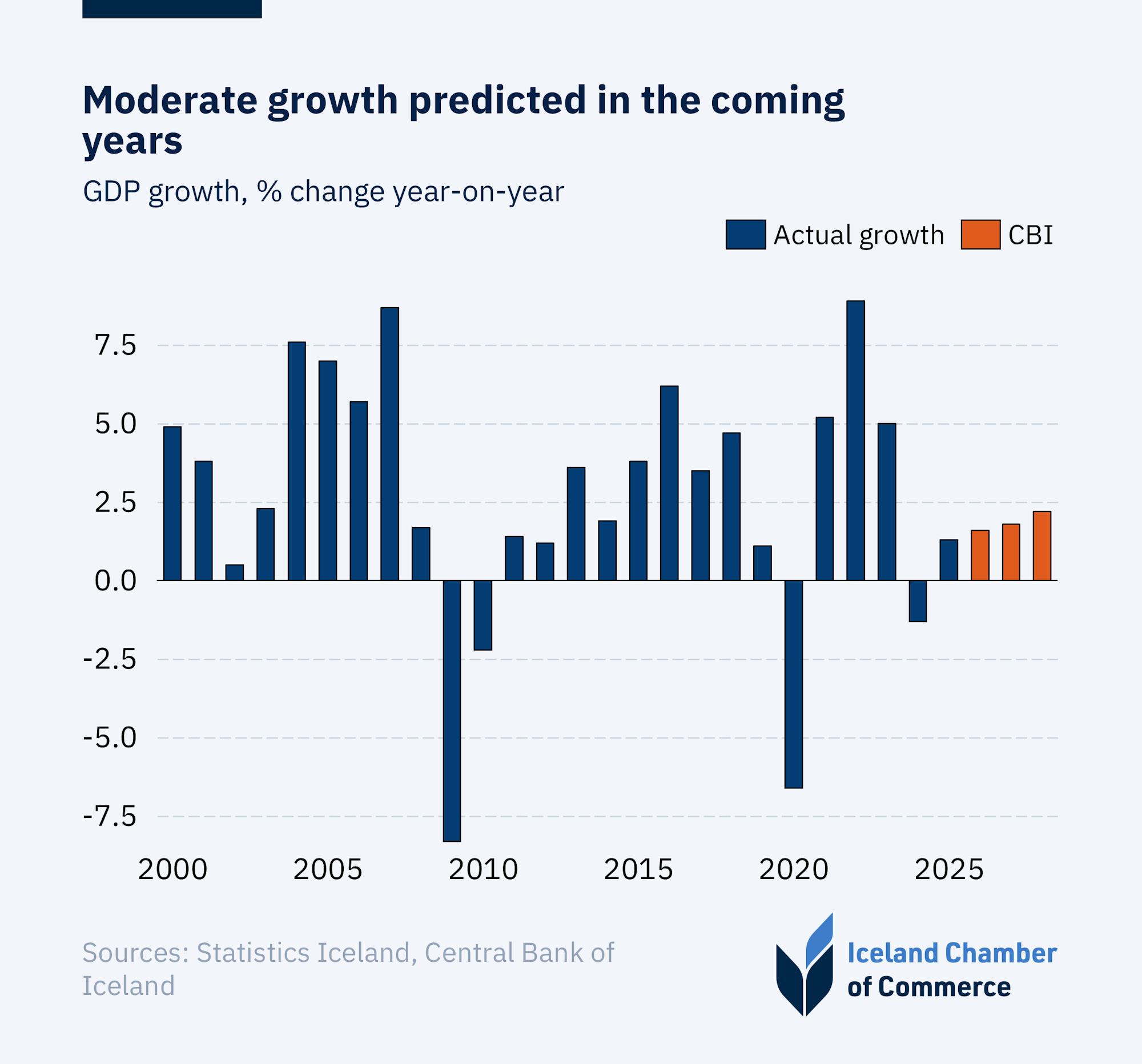
Following a historic period of economic growth driven by the post-COVID rebound, the economy has cooled slightly. GDP growth measured at 1.3% in 2025, while forecasts project 1.6% growth in 2026 and an average growth of 2% in the following two years.
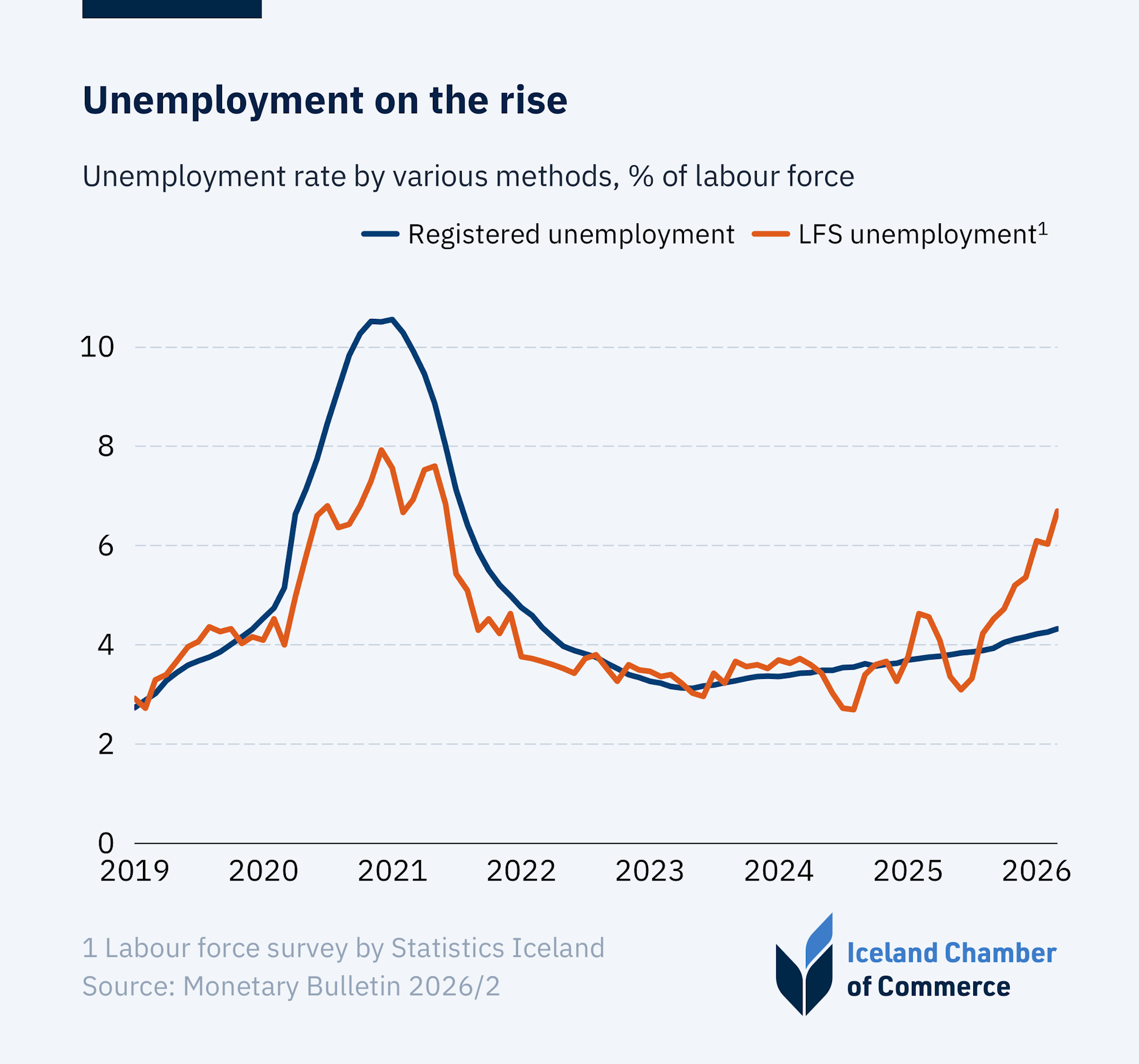
Rising unemployment is another sign of a cooling economy. According to Statistics Iceland’s labour force survey (LFS), seasonally adjusted unemployment stood at 7.6% in the first quarter of 2026. The recent increase in unemployment can be partially attributed to improved measurements among immigrants rather than a broader labour market trend. Nevertheless, registered unemployment is trending upward, and there are signs that companies are holding back on hiring.
Resilience in tourism, despite challenges
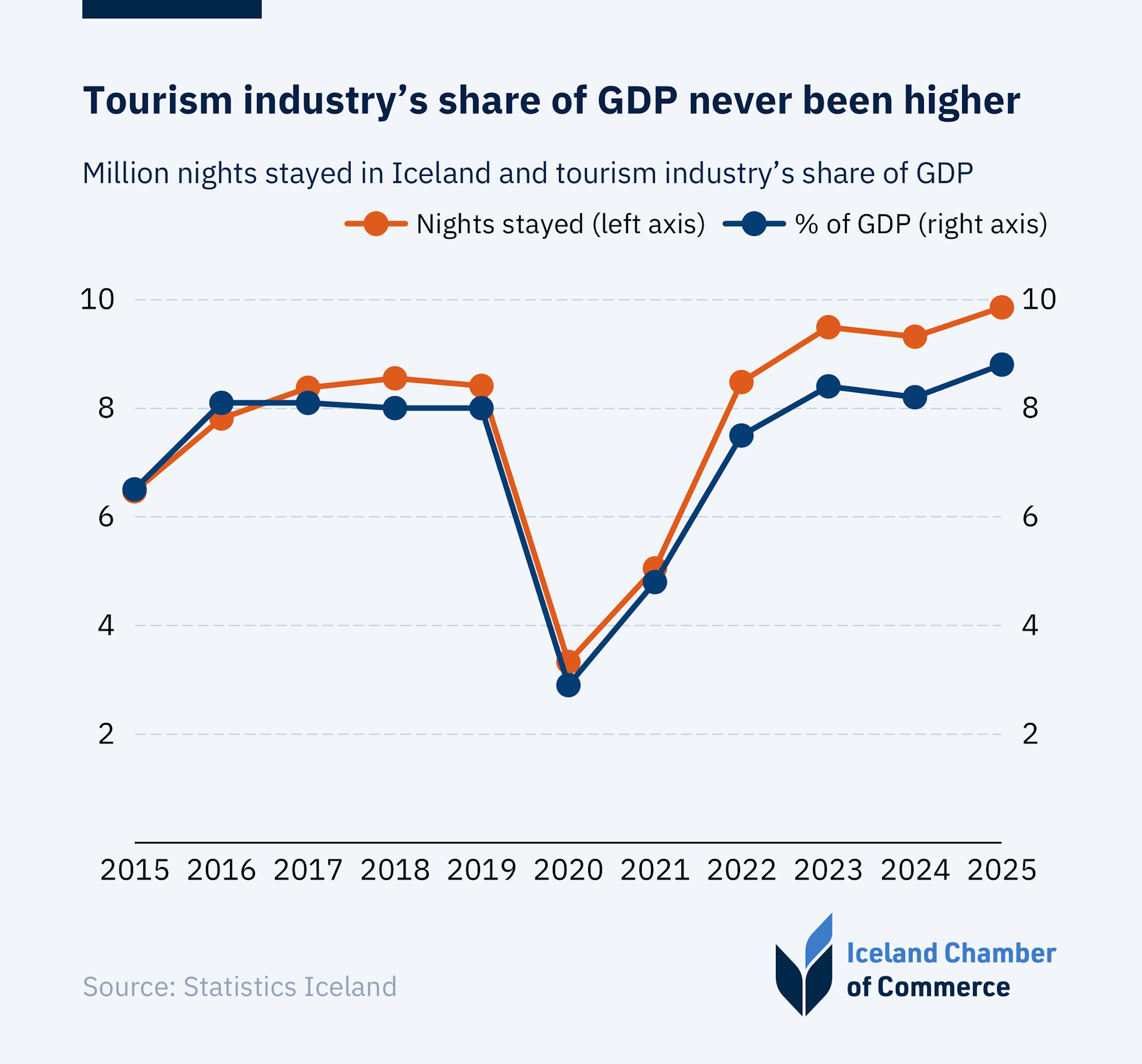
Tourism has recovered strongly since the pandemic, with its share of GDP reaching record highs of 8.8% in 2025. This is despite various challenges, most notably the bankruptcy of Iceland’s low-cost airline Play, which caused a supply shock in flights to and from the country toward the end of 2025. In addition, the conflict in the Middle East has driven up fuel prices, with corresponding effects on airlines’ operating costs. A solar eclipse in August is expected to give the industry a boost through increased demand to visit the country. Iceland remains an expensive destination compared to other countries, which undermines the sector's competitiveness.
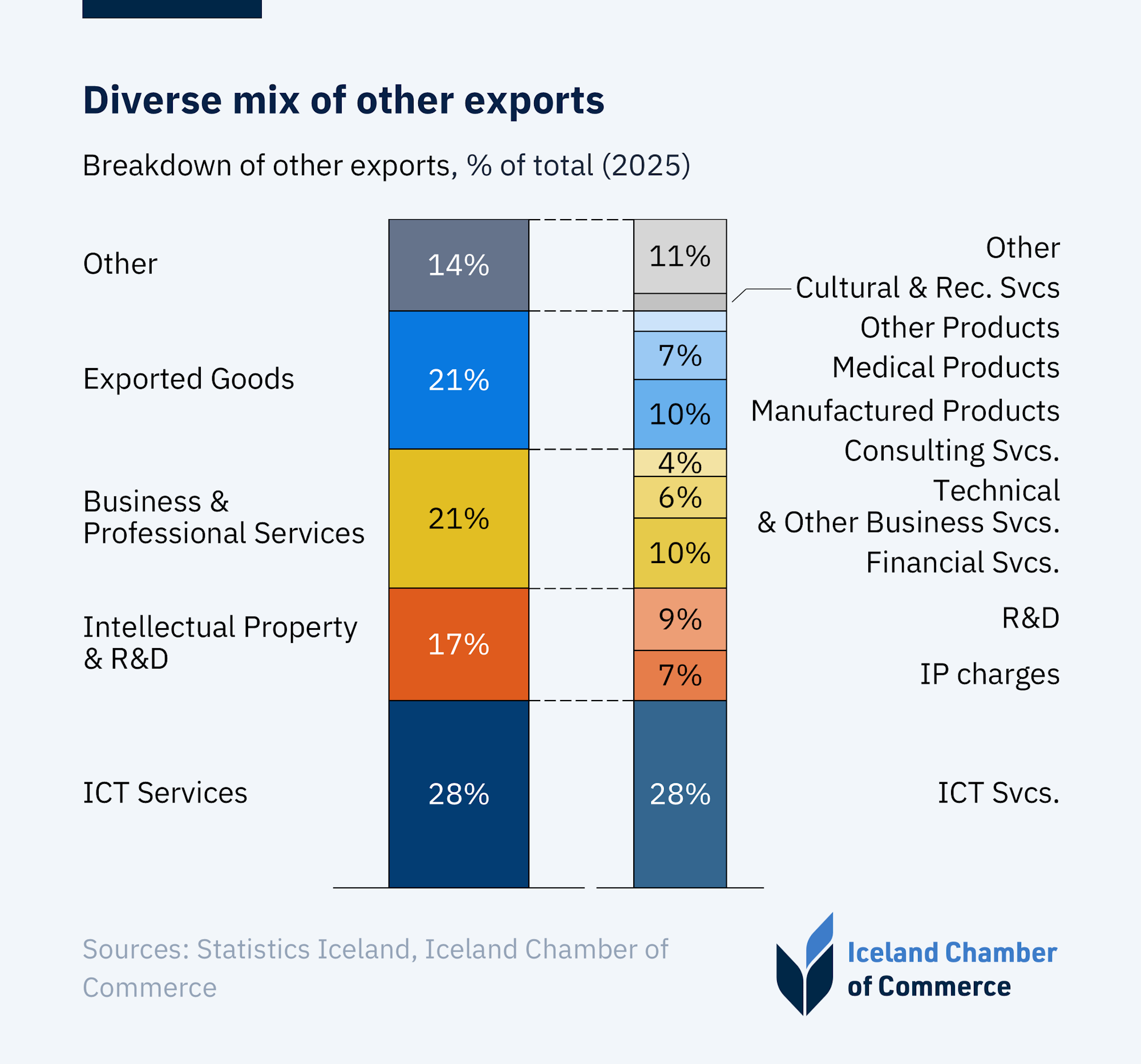
Other exports, which consist mainly of tradable goods and services independent of natural resources, accounted for 24% of Iceland’s exported value, with only tourism weighing more. Iceland’s pursuit of economic diversification is essential for reducing reliance on resource sectors like tourism and fishing. The nation’s well-educated workforce and culture of innovation provide a strong foundation for this transition.
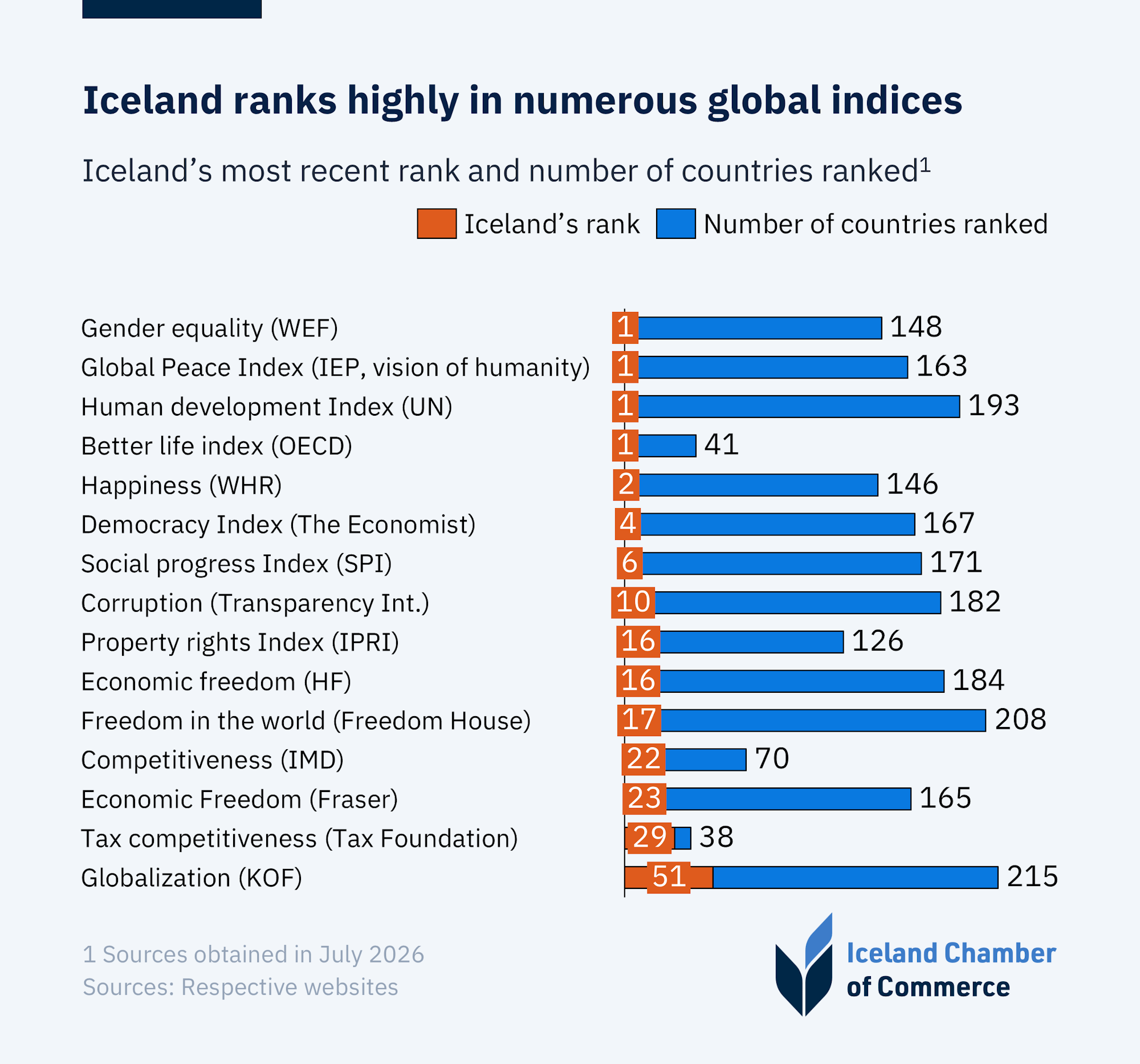
Iceland ranks high on international lists, but falls in competitiveness
Iceland ranks highly on many social indicators — the country ranks first in gender equality, peace, and living standards, and is the second-happiest country in the world, after Finland.
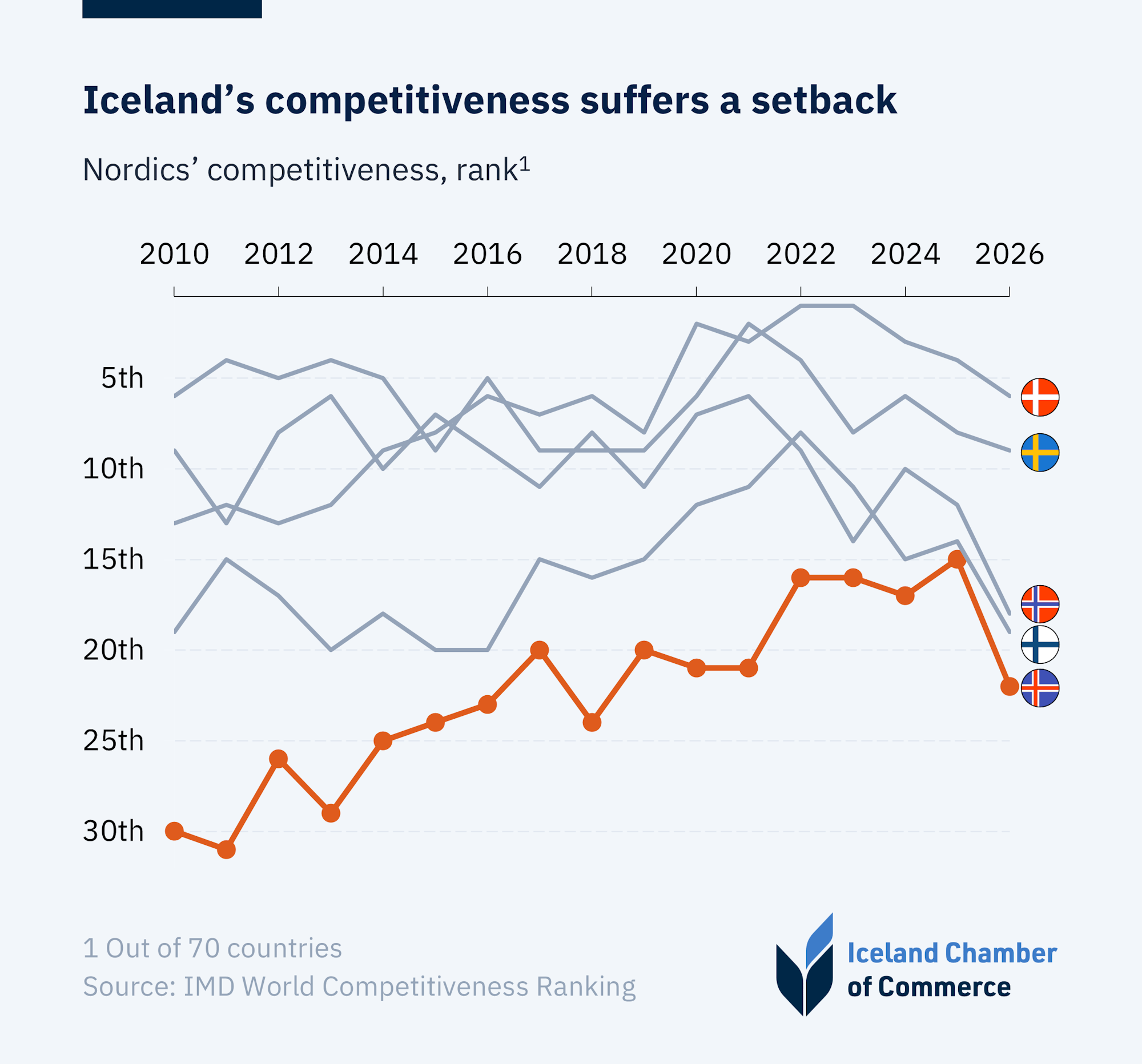
Iceland ranks 22nd out of 70 countries on the IMD World Competitiveness list, seven places lower than last year. Despite this year's decline, competitiveness has increased significantly since 2010, when Iceland ranked 30th
Paywalled content
This content is only available to members of the Chamber.
Sign in or apply for membership to access it.
Related Content
The Icelandic Economy 2025

The Icelandic Economy Q4 2023
The Icelandic Economy - Q1 2022
Icelandic Economy Q1 2023
Icelandic Economy Q2 2023