Expectations of falling inflation at the Monetary Policy Meeting
Central Bank Governor Ásgeir Jónsson said at Viðskiptaráð’s Monetary Policy Meeting on 19 November that inflation is now close to its peak and will fall relatively quickly next year. Andri Þór Guðmundsson, Chair of Viðskiptaráð, urged the government to balance the budget through spending restraint rather than higher taxes and charges.

Links
Viðskiptaráð’s Monetary Policy Meeting took place before a full house at the Parliament Hotel on the morning of 19 November. The theme of the meeting was An Economy in Turbulence.
Central Bank Governor Ásgeir Jónsson gave the keynote address, entitled Monetary Policy in a Cooling Economy. He reviewed signs of cooling in the economy, including rising unemployment and weaker domestic private consumption, which had slowed faster than expected. House prices had also fallen in real terms and the number of homes for sale had increased.
Ásgeir said inflation is now close to its peak and will fall relatively quickly next year as the economy cools. Domestic demand is forecast to weaken considerably next year, while exports are expected to grow, offering hope of a less painful adjustment. He also pointed out that household and corporate debt is low in historical and international terms.

Everyone needs to pull in the same direction
Andri Þór Guðmundsson, Chair of Viðskiptaráð, opened the meeting. He noted that real interest rates had fallen from around 3.5% to around 2% since the last meeting, despite a 75 basis point increase in the policy rate, as inflation had proved more persistent than hoped.
Andri urged the government to balance the budget through better prioritisation rather than higher taxes and charges on businesses and households. He pointed out that, according to the Central Bank’s analysis, a deficit of ISK 17 billion is expected next year, despite a balanced budget bill.
Andri also criticised the public sector’s involvement in the labour market, both through government packages to facilitate wage agreements and through pay rises above the benchmark set in the private sector, as in the teachers’ wage agreements. “The state cannot call for responsibility and restraint in the labour market on the one hand while undermining both with its own decisions on the other,” he said.
Andri’s address can be read in full here (in Icelandic).

Changes to the budget announced
The talks were followed by two panel discussions. The first, on economic management and government, featured Daði Már Kristófersson, Minister of Finance and Economic Affairs, Þórarinn G. Pétursson, Deputy Governor of the Central Bank, and Hafsteinn Hauksson, Chief Economist at Kvika banki. The second, on business and trade, featured Finnur Oddsson, CEO of Hagar, Álfheiður Ágústsdóttir, Deputy CEO of Travel Connect, and Lilja Björk Einarsdóttir, CEO of Landsbankinn.
In the first panel discussion, Minister of Finance and Economic Affairs Daði Már Kristófersson announced further measures between readings of the budget bill so that the goal of a balanced budget next year can be met.


This article was automatically translated from the Icelandic original.
Related Content

A new and simpler system for certificates of origin

Full house at the launch of the new Guidelines on Corporate Governance

New edition of the Guidelines on Corporate Governance
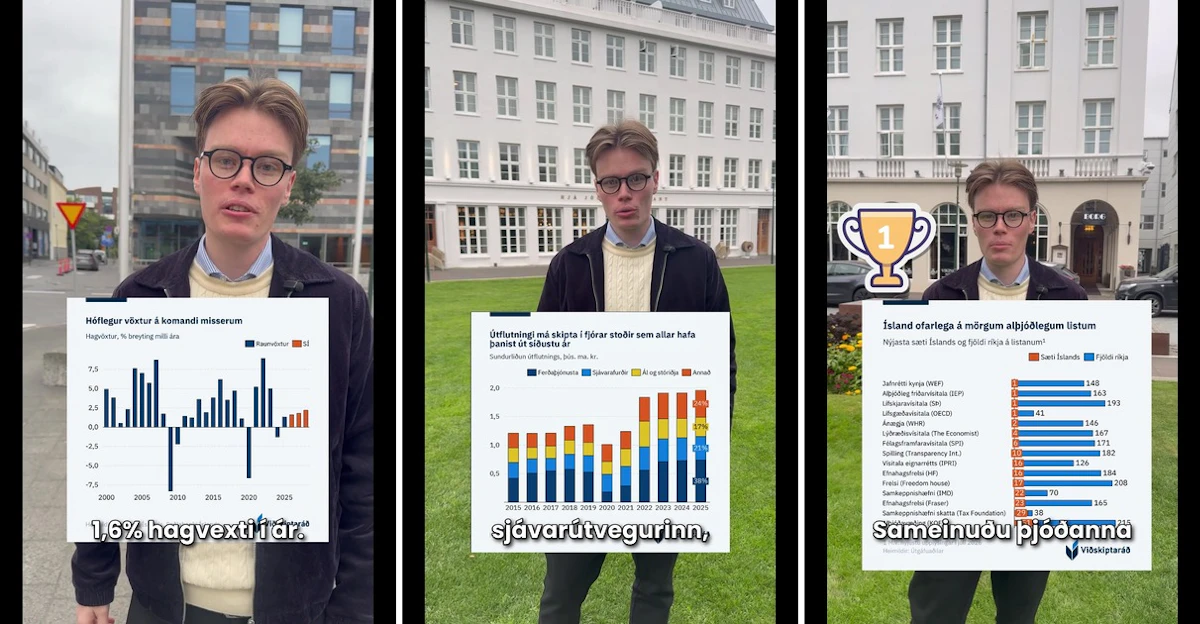
Video: The Icelandic economy in 60 seconds
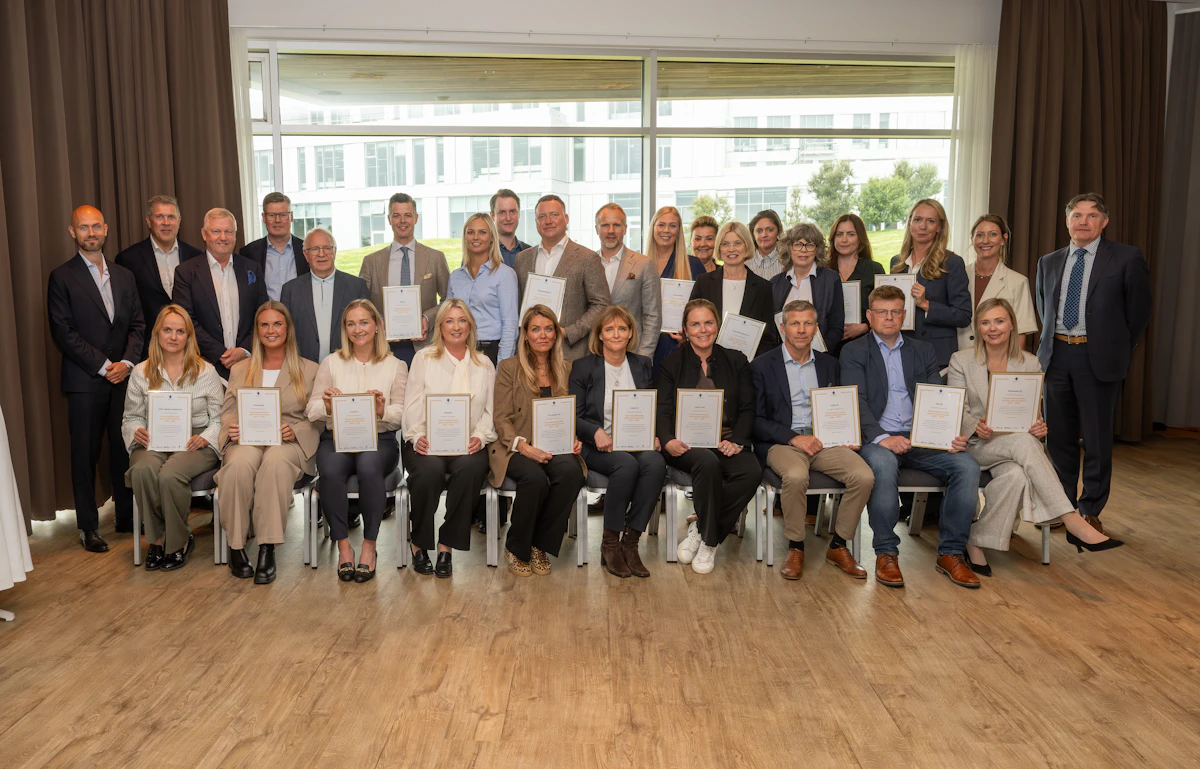
Eighteen exemplary companies recognised for good governance